The canopy
At the surface, fronds spread into a golden raft that can stretch for kilometres. This is the only part ever harvested: the top metre, trimmed like a hedge, leaving the forest fully intact to regrow.
A field guide for modern agriculture
Macrocystis pyrifera grows up to 60 cm a day, shelters entire ecosystems, and powers a new generation of crop biostimulants.
Macrocystis pyrifera is a brown alga of cold, nutrient-rich waters, and one of the fastest-growing organisms ever measured. A single plant can add half a metre of new tissue per day and stretch more than 45 metres from seafloor to surface.
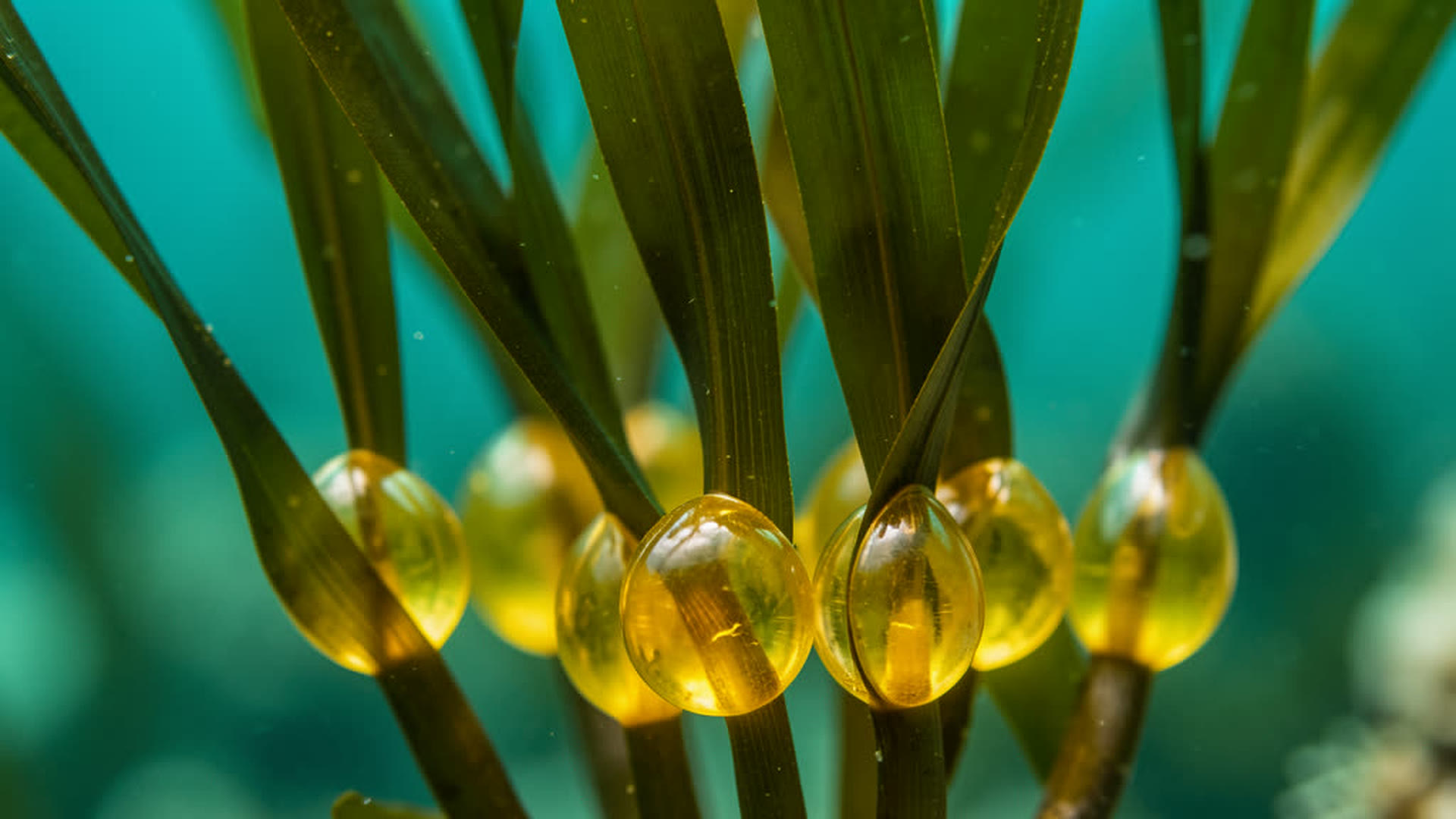
At the surface, fronds spread into a golden raft that can stretch for kilometres. This is the only part ever harvested: the top metre, trimmed like a hedge, leaving the forest fully intact to regrow.
Each frond carries dozens of blades, and at the base of every blade sits a gas-filled bladder called a pneumatocyst. These living floats lift the kelp toward the light, metre by metre, at up to 60 cm a day.
Flexible stipes rise like trunks through the water column, engineered by evolution to survive storm surge and powerful currents. That structural chemistry, rich in alginates, is part of what makes giant kelp so valuable on land.
It looks like a root system, but it does not feed the plant. The holdfast anchors the kelp to rock while every blade drinks nutrients directly from the water: nitrogen, phosphorus, potassium, and over a dozen trace minerals.
Most seaweed inputs come from wild-harvested Ascophyllum nodosum or Ecklonia maxima. Giant kelp is the only major biostimulant species cultivated at scale, with full traceability from hatchery to field.
North Atlantic rockweed
South African sea bamboo
Cultivated giant kelp
Giant kelp concentrates a rare portfolio of bioactive compounds from cold ocean water. Gently extracted, they act in synergy to regulate crop development, defence, and nutrient flow.
A storage glucan that acts as a defence elicitor. It primes the plant's immune signalling, including the salicylic and jasmonic acid pathways, before stress arrives.
A powerful osmolyte and antioxidant. It helps regulate water movement between plant and environment and protects cells under drought, heat, and salinity.
A bioactive fibre unique to brown seaweeds, associated with improved plant health, stronger cell walls, and enhanced flowering and fruit set.
The same chemistry that lets kelp survive storm surge. In the soil, alginates improve moisture retention and support beneficial microbial structure.
Marine polyphenols found only in brown algae. Strong antioxidants that shield tissue from UV and oxidative stress, in the kelp and in the crop.
Copper, zinc, iron, manganese, molybdenum, and boron, alongside fucoxanthin pigments, protein hydrolysates, bioactive peptides, and natural plant growth regulators. Together they up- and down-regulate key stages of crop development.
Modulates phytohormones and antioxidative enzymes at vegetative and reproductive stages
Regulates jasmonic and salicylic acid signalling and reactive oxygen species to strengthen defence
Promotes lateral root development and leaf architecture for better nutrient uptake
Four steps, one unbroken chain of custody. Keep scrolling.
Hatchery-selected sporophytes are seeded onto lines suspended from large-scale offshore structures. Kelp forests grow up to 15 metres tall in stable, deep, clean ocean water, far from coastal runoff and heavy metals.
Only the top metre is trimmed, the fastest-regrowing tissue on the plant. The forest, the holdfast, and every species sheltering beneath it remain untouched. The same forest is harvested again and again.
A mechanical, high-pressure cell-burst process releases the full suite of bioactive compounds without high heat or harsh chemicals, followed by filtration to concentrate the key molecules. Every batch passes microbial and physico-biochemical quality control.
Foliar, soil, or seed treatment, typically 2 L/ha timed to BBCH growth stages: before flowering, at fruit set, during ripening. Fully water-soluble across a wide pH range and compatible with standard tank mixes.
Proven in the field
Every figure below comes from third-party, GEP-certified field trials run by accredited contract research organisations between 2022 and 2025, benchmarking cultivated Macrocystis extract against untreated controls and leading Ascophyllum- and Ecklonia-based products.
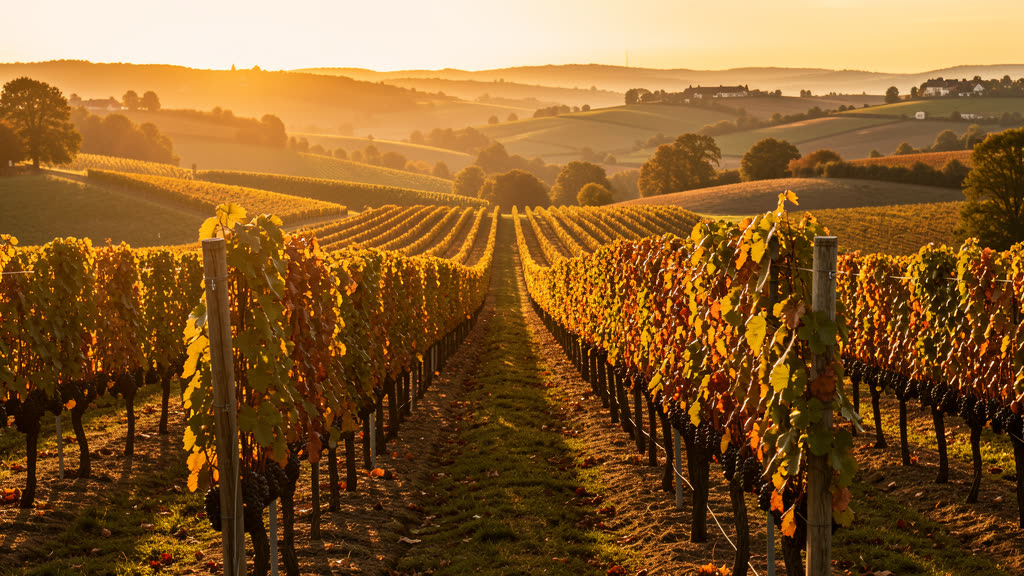
Trials 2023 to 2025, with Champagne Experimentation
“With StimBlue+, we saw a unique boost in nutrient availability. Even through foliar application, BeCrop analysis confirmed these effects across fields, highlighting the reach and effectiveness of this biostimulant.”Juan Rebori, Biome Makers
came from synthetic nitrogen fertilisers in 2019. Every hectare that keeps yield with less synthetic nitrogen matters.
in the waters around cultivated kelp forests. A farm that functions as habitat, measured with environmental DNA monitoring.
of offshore kelp forest under cultivation, with canopy-only harvesting that leaves the ecosystem standing.
Independent measurement, reporting, and verification of the full chain, from ocean farm to bottled extract. Kelp forests capture carbon faster than land forests per unit area.
Primary sources behind every claim on this page. Read them yourself.
StimBlue+ by Kelp Blue is 100% cultivated Macrocystis pyrifera, registered in 70+ jurisdictions, approved for organic agriculture, and backed by independent science on your crop.